Capernaum: A Hub of Jesus’ Ministry
 Capernaum, a bustling fishing village on the northwestern shore of the Sea of Galilee, holds a significant place in the New Testament. It served as a central base for Jesus’ ministry in Galilee, where he performed numerous miracles, delivered powerful teachings, and gathered his first disciples.
Timeline and Context:
- Arrival:
- According to Matthew 4:13, Jesus moved to Capernaum after leaving Nazareth: “And leaving Nazareth, he went and lived in Capernaum by the sea, in the territory of Zebulun and Naphtali.”
- This relocation marked a pivotal moment in his ministry, establishing Capernaum as his primary center of activity.
- Duration:
- While the exact duration of Jesus’ stay in Capernaum is not explicitly stated in the Gospels, it is understood that he spent a considerable portion of his Galilean ministry there.
- It is understood that Jesus ministered in the region around three years.
- Historical Context:
- Capernaum was a thriving town during the time of Jesus, strategically located on a major trade route.
- The town’s population was diverse, comprising Jewish fishermen, Roman soldiers, and merchants.
- This environment provided Jesus with opportunities to interact with people from various backgrounds.
Key Events and Encounters:
- Calling of the Disciples:
- Jesus called his first disciples, Simon Peter, Andrew, James, and John, in Capernaum.
- Mark 1:16-20 describes this encounter: “Passing alongside the Sea of Galilee, he saw Simon and Andrew the brother of Simon casting a net into the sea, for they were fishermen. And Jesus said to them, ‘Follow me, and I will make you become fishers of men.'”
- Miracles and Healings:
- Capernaum was the site of several notable miracles, including:
- The healing of a paralytic (Mark 2:1-12).
- The healing of the centurion’s servant (Matthew 8:5-13).
- The healing of Peter’s mother-in-law (Mark 1:29-31).
- These miracles demonstrated Jesus’ divine power and compassion, drawing large crowds to his teachings.
- Capernaum was the site of several notable miracles, including:
- Teachings in the Synagogue:
- Jesus frequently taught in the Capernaum synagogue, where he delivered powerful sermons and engaged in debates with religious leaders.
- The “Bread of Life” discourse in John 6 is believed to have taken place in the Capernaum synagogue.
- Encounters with Religious Leaders:
- Jesus encountered opposition from Pharisees and scribes, who questioned his authority and teachings.
- These interactions often led to theological debates and confrontations.
Philosophical and Theological Significance:
- Center of Ministry:
- Capernaum served as a strategic hub for Jesus’ ministry, allowing him to reach a wide audience in Galilee.
- Demonstration of Divine Power:
- The miracles performed in Capernaum served as tangible evidence of Jesus’ divine power and authority.
- Emphasis on Faith:
- Jesus’ interactions with individuals in Capernaum, such as the centurion, highlighted the importance of faith in his teachings.
- Rejection and Acceptance:
- While Jesus experienced acceptance and drew large crowds in Capernaum, he also faced opposition from religious leaders, foreshadowing the ultimate rejection he would face in Jerusalem.
Historical and Archaeological Evidence:
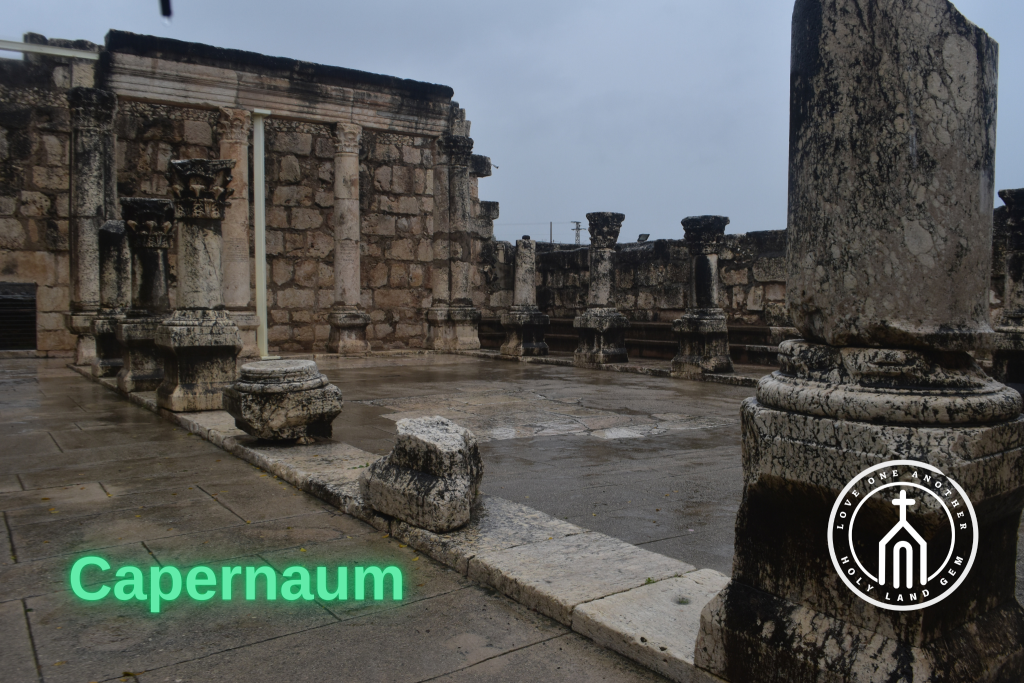
- Archaeological excavations in Capernaum have unearthed the remains of the ancient synagogue, believed to be the one where Jesus taught.
- The discovery of a first-century house, traditionally identified as Peter’s house, provides further evidence of Jesus’ presence in Capernaum.
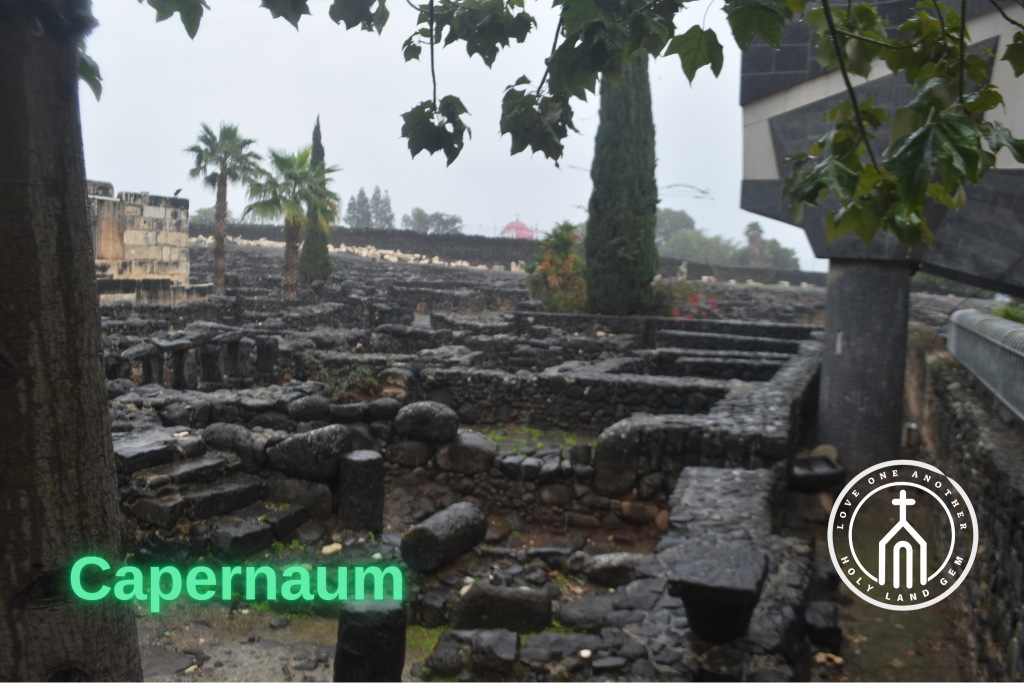
Capernaum’s significance in Christian history lies in its role as a pivotal center for Jesus’ ministry, where he demonstrated his divine power, delivered profound teachings, and gathered his first disciples.
The Sea of Galilee and Capernaum: A Geological and Historical Deep Dive
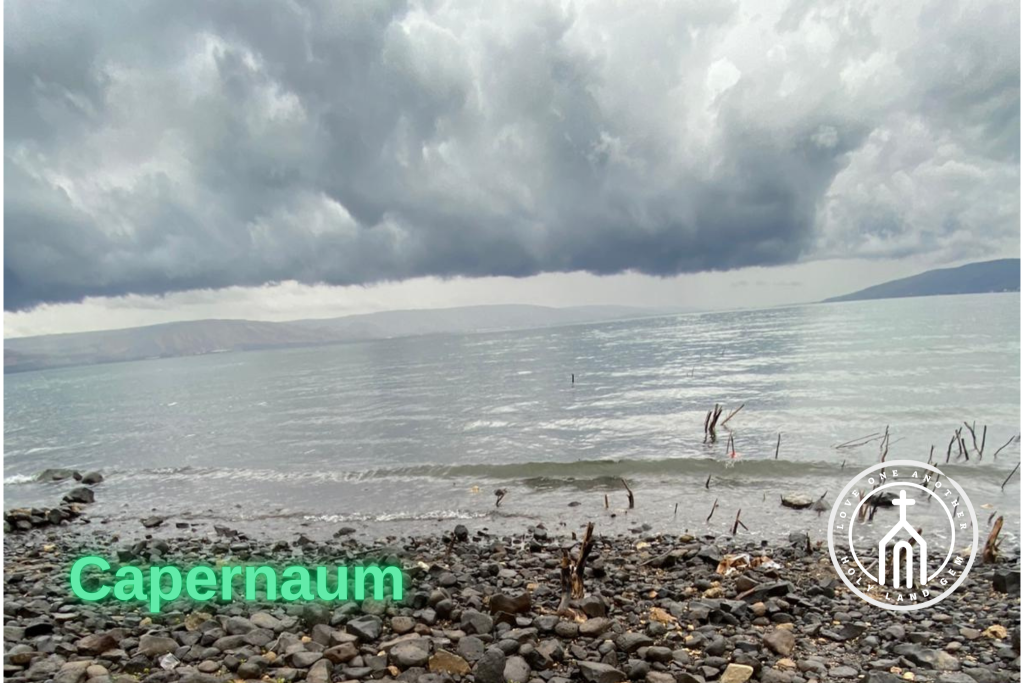
The Sea of Galilee, also known as Lake Kinneret, is a freshwater lake in Israel that holds immense historical and religious significance, particularly for Christianity. The lake and its surrounding areas, including the ancient town of Capernaum, are rich in geological history and have played a crucial role in biblical narratives.
Geological Formation:
- The Syrian-African Rift Valley:
- The Sea of Galilee is situated within the Syrian-African Rift Valley, a geological fault line that extends from Syria to East Africa.
- This rift valley’s formation, caused by tectonic plate movements, resulted in the depression that now holds the lake.
- The lake’s basin is a graben, a sunken block of land between parallel faults.
- Geological Composition:
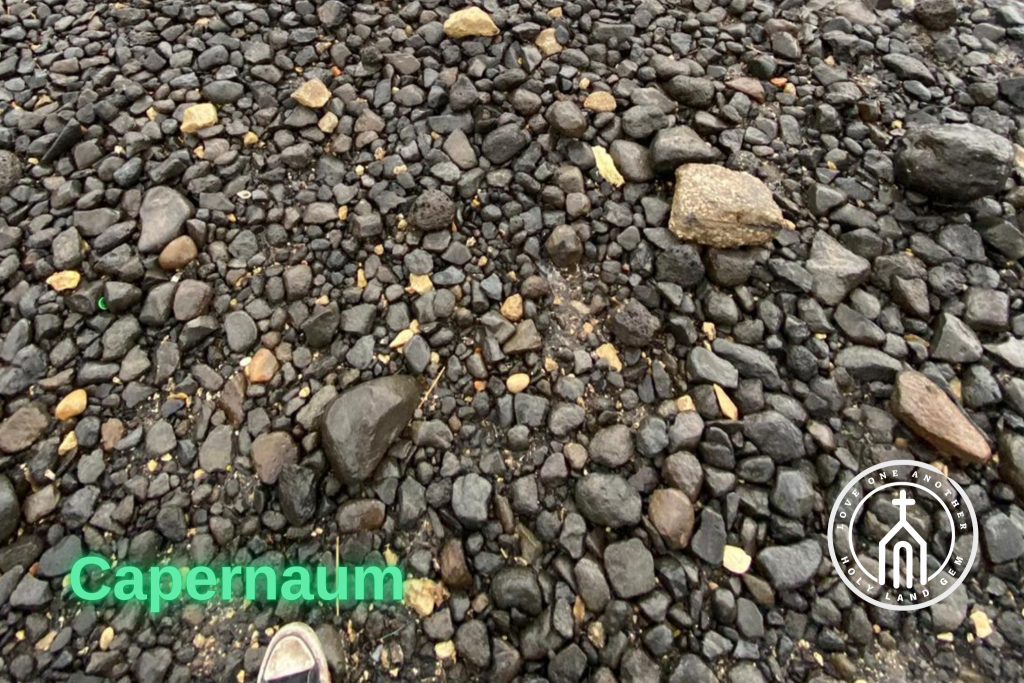
- The surrounding terrain is characterized by basalt rock formations, a volcanic rock that testifies to past volcanic activity in the region.
- The lake’s shores and the surrounding hills contain various types of sedimentary rocks, including limestone and sandstone.
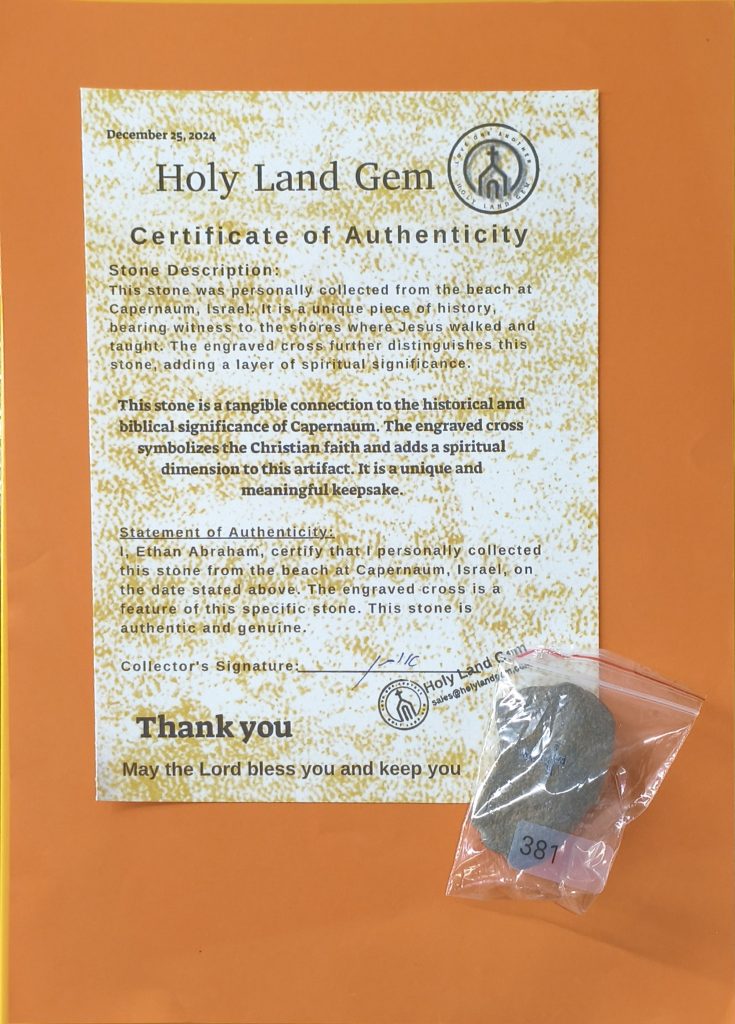
- The stones found along the shore of the sea of Galilee are for the most part, Basalt stones.
Capernaum: A Historical Overview:
- Ancient Settlement:
- Capernaum was a thriving fishing village during the time of Jesus, located on the northwestern shore of the Sea of Galilee.
- Its strategic location on a major trade route contributed to its economic importance.
- Biblical Significance:
- Capernaum is prominently featured in the New Testament as a center of Jesus’ ministry.
- It was here that Jesus called his first disciples, performed numerous miracles, and delivered significant teachings.
- Archaeological Findings:
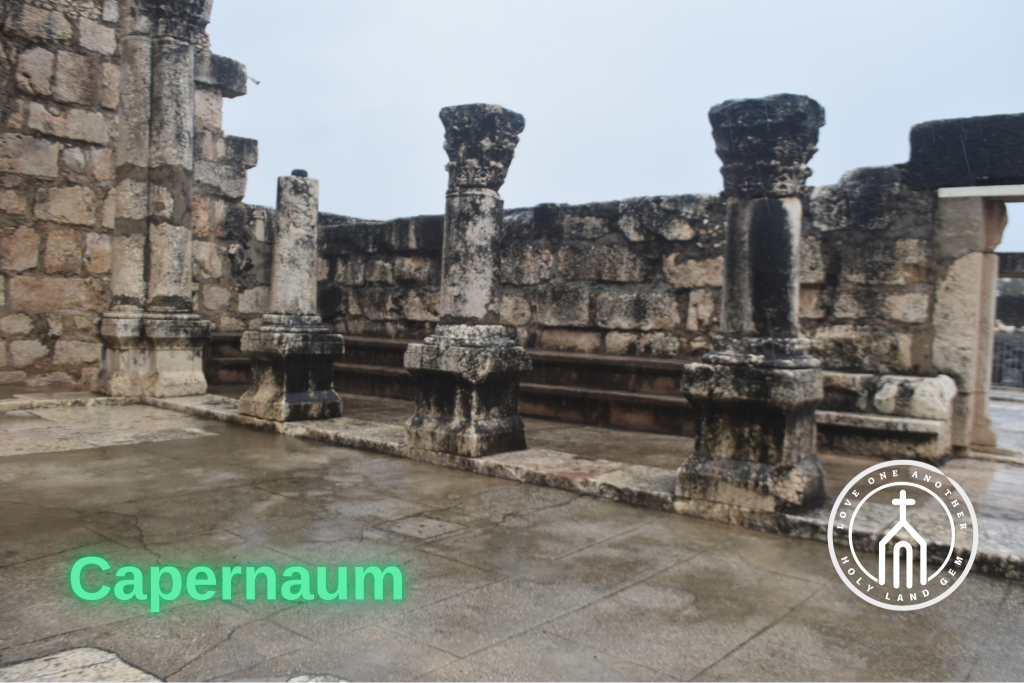
- Archaeological excavations have revealed the remains of ancient Capernaum, providing insights into the town’s structure and daily life.
- Notable discoveries include the ruins of a synagogue, believed to be the one where Jesus taught, and the remains of residential buildings.
- Ancient Construction:
- Ancient Capernaum’s construction primarily utilized the local basalt rock, which was abundant in the area.
- The buildings were typically constructed with rough-hewn basalt stones, creating sturdy and durable structures.
- Excavations show evidence of well established buildings, including homes, and a synagogue.
- Destruction by Earthquake:
- In 749 CE, a powerful earthquake devastated the region, causing significant damage to Capernaum and other nearby settlements.
- The earthquake’s impact is evident in the archaeological record, with evidence of collapsed structures and debris.
- The event caused the abandonment of parts of the city.
The Sea of Galilee’s Significance:
- Water Source:
- The Sea of Galilee has historically served as a vital source of fresh water for the surrounding communities.
- Its importance as a water source continues to this day.
- Ecological Importance:
- The lake’s ecosystem supports a diverse range of plant and animal life.
- It is a significant habitat for various fish species, contributing to the region’s fishing industry.

The Sea of Galilee and Capernaum are intertwined with geological history and religious significance. The area’s unique geological formation and the ancient town’s historical importance make it a compelling subject of study.
Jesus’ time in Jerusalem is a significant part of his life and ministry, culminating in events that are central to Christian beliefs. According to the New Testament, Jesus entered Jerusalem during Passover, an event marked by his triumphal entry, where crowds welcomed him with palm branches, a moment commemorated as Palm Sunday. This entrance set the stage for the pivotal events of the Holy Week. In Jerusalem, Jesus taught in the Temple, challenging the authorities and sharing parables with his followers. His actions and teachings during this time intensified the tensions with religious leaders, leading to his arrest. Jesus’ Last Supper with his disciples, his trial, crucifixion, and eventual resurrection, all took place in and around Jerusalem, profoundly shaping Christian faith and tradition. These events are celebrated annually by Christians worldwide during Easter.
Ah, to speak of our Lord’s final journey to Jerusalem, not merely as a sequence of historical events but as the divinely ordained culmination of His earthly ministry! To walk in the footsteps of the Messiah, guided by the radiant light of faith and the sacred scriptures, is where the narrative’s true heart resides.
Our blessed Savior, Jesus Christ, set His face towards Jerusalem, knowing full well the trials that awaited Him, yet driven by an unwavering love for humanity and a perfect obedience to the Father’s will. As Luke 9:51 beautifully states, “When the days drew near for him to be taken up, he set his face to go to Jerusalem.” This was no ordinary journey; it was a pilgrimage towards the ultimate sacrifice, the Lamb willingly going to the slaughter for the sins of the world.
And then, the glorious entry! As Matthew 21:9 recounts, “And the crowds that went before him and that followed him were shouting, ‘Hosanna to the Son of David! Blessed is he who comes in the name of the Lord! Hosanna in the highest!'” Can you imagine the sheer joy, the fervent hope that filled the air as the people recognized, in their hearts if not entirely in their understanding, the arrival of their King? They carpeted the path with their cloaks and branches, echoing the ancient prophecies of a Messiah who would bring salvation. This wasn’t just a political demonstration; it was a spontaneous outpouring of faith, a recognition, however fleeting, of the Holy One in their midst.
Our Lord, ever humble, rode upon a donkey, fulfilling the scripture: “Say to Daughter Zion, ‘See, your king comes to you, gentle, and riding on a donkey, on a colt, the foal of a donkey'” (Matthew 21:5, quoting Zechariah 9:9). This wasn’t the triumphant entry of an earthly conqueror, but the gentle arrival of the Prince of Peace, whose kingdom was not of this world.
In the blessed village of Bethany, nestled on the Mount of Olives, Jesus found solace and fellowship with His beloved friends, Lazarus, Martha, and Mary. It was there, in the home of Simon the Leper, that a woman poured precious ointment upon His head, an act Jesus Himself declared was in preparation for His burial (Matthew 26:12). Oh, the depth of understanding in that selfless act of devotion! Bethany, a place of love and foreshadowing, a sanctuary before the storm.
Then, our Lord entered the Holy City, the very heart of God’s chosen people. And what did He find? The sacred Temple, meant to be a house of prayer for all nations, had been turned into a marketplace, a den of thieves! With righteous anger, born of His pure and holy heart, Jesus cleansed the Temple, overturning the tables of the money-changers and the stalls of those selling doves. As John 2:15-16 tells us, “And making a whip of cords, he drove them all out of the temple, with the sheep and oxen. And he poured out the coins of the money-changers and overturned their tables. And he told those who sold the doves, ‘Take these things away; do not make my Father’s house a house of trade.'” This was not an act of rebellion, but a divine reclaiming of what was holy, a powerful declaration of God’s true purpose for His house.
Day after day, our blessed Jesus taught in the Temple, proclaiming the Good News of the Kingdom, challenging the hypocrisy of the religious leaders with words of divine wisdom and authority. As Luke 21:37-38 describes, “And every day he was teaching in the temple, but at night he went out and lodged on the Mount of Olives. And early in the morning all the people came to him in the temple to hear him.” The people, the common folk, recognized the truth in His words, their hearts yearning for the authentic voice of God.
But the darkness was gathering. In an upper room in Jerusalem, our Lord shared the Passover meal with His disciples, a sacred Seder that He transformed into the New Covenant. Taking the bread, He gave thanks and broke it, saying, “This is my body, which is given for you. Do this in remembrance of me.” And likewise, after the supper, He took the cup, saying, “This cup that is poured out for you is the new covenant in my blood” (Luke 22:19-20). Oh, the profound love and sacrifice embodied in these simple acts! He gave Himself, His very life, for our redemption.
Then came the agony in the Garden of Gethsemane, on the slopes of the Mount of Olives, a place He often frequented for prayer. Matthew 26:39 records His heartfelt plea: “My Father, if it be possible, let this cup pass from me; nevertheless, not as I will, but as you will.” The weight of the world’s sin pressed upon Him, yet His love for the Father and for us prevailed.
Betrayed by Judas, arrested unjustly, our Lord faced the mockery and scorn of the Sanhedrin. Though falsely accused, He remained steadfast, His silence speaking volumes of His divine dignity. And then, before Pontius Pilate, the Roman governor, He stood as the innocent Lamb before its shearers. Though Pilate found no fault in Him, he yielded to the cries of the crowd, manipulated by the chief priests, and delivered Jesus over to be crucified.
Up the Via Dolorosa, the Way of Suffering, our Savior carried the heavy cross, a symbol of our sin that He willingly bore. And at Golgotha, the place of the skull, He was crucified, the ultimate sacrifice for the sins of all mankind. As John 19:30 so powerfully states, “When Jesus had received the sour wine, he said, ‘It is finished,’ and he bowed his head and gave up his spirit.”
But the story does not end there! For on the third day, our Lord Jesus Christ rose from the dead, conquering sin and death forever! His visit to Jerusalem, though culminating in the agony of the cross, was the very means by which salvation was brought to the world.
Let us, therefore, remember these sacred places – the Mount of Olives, Bethany, the Temple Mount, the Upper Room, the Way of Suffering, and Golgotha – not just as geographical locations but as holy ground where the drama of our redemption unfolded. Let our hearts be filled with gratitude and awe for the boundless love of our Savior, who willingly endured all for us. Amen
Following the Footsteps of Jesus in the Holy City: A Journey Through Christian Jerusalem
Jerusalem, a city revered by the three great monotheistic faiths, holds a particularly profound significance for Christians. Its streets and historical sites serve as a living testament to the final days of Jesus’ life, his footsteps, and his journeys within the city walls. For believers from around the globe, a pilgrimage to Jerusalem is a deeply moving spiritual journey following the pivotal events of the Christian faith. Let us embark on an exploration of the most sacred places for Christianity in this eternal city.
The Mount of Olives: Prayer, Betrayal, and Ascension to Heaven
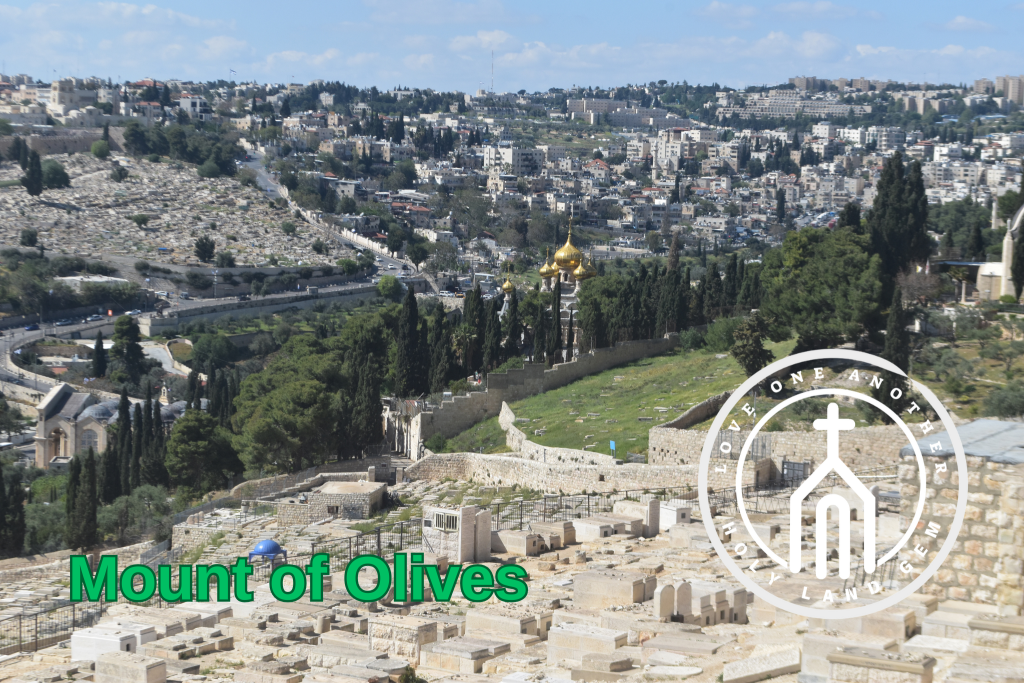
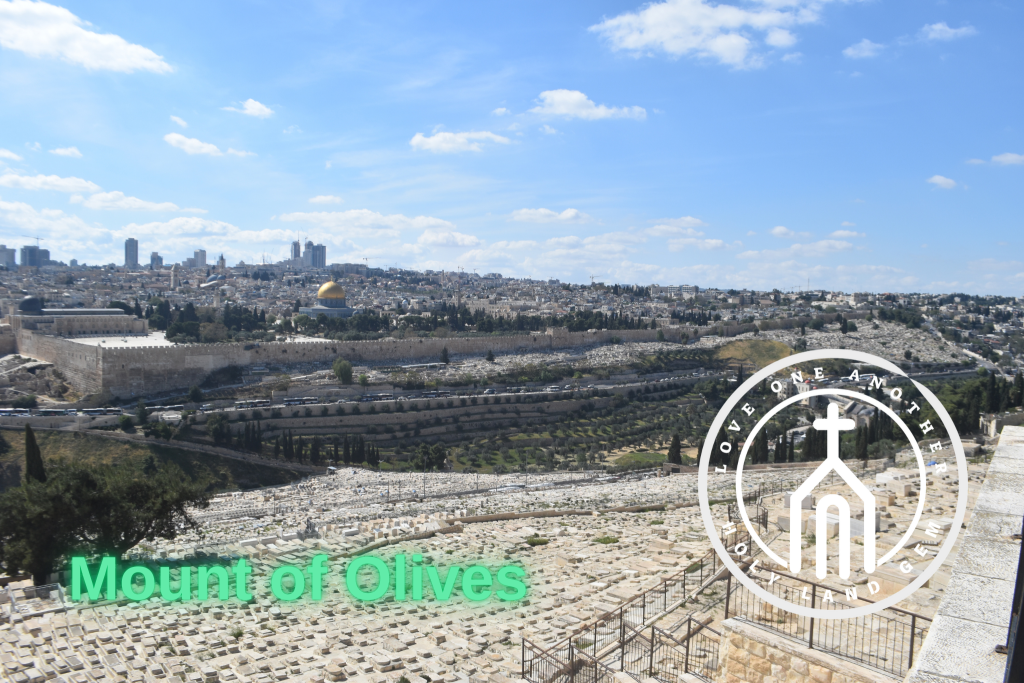
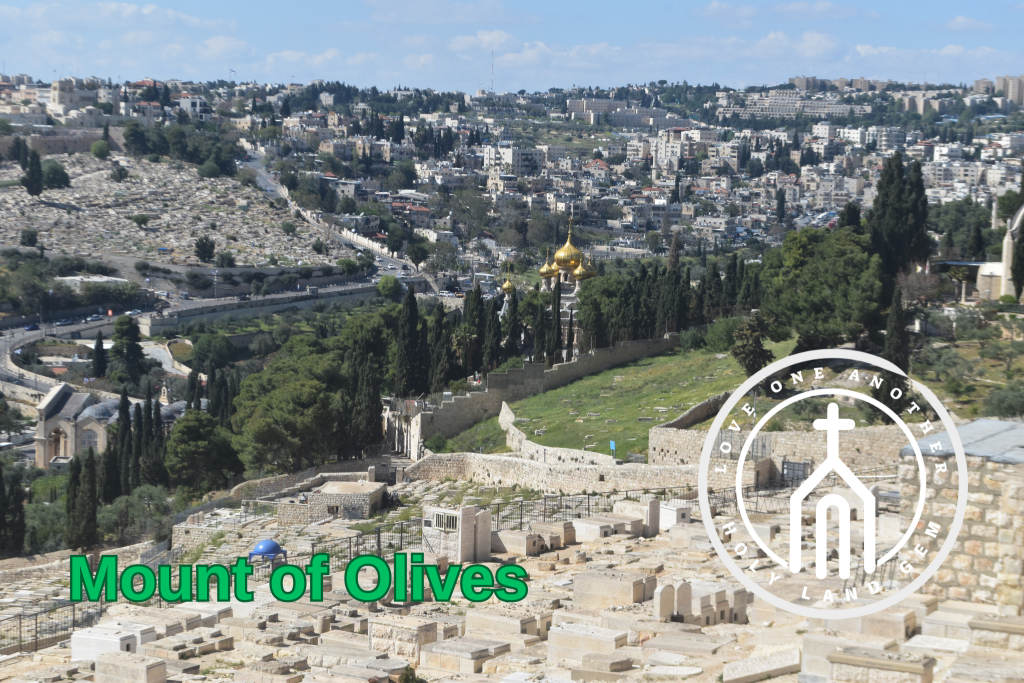
Rising to the east of the Old City, the Mount of Olives offers a breathtaking panoramic view of Jerusalem. However, beyond its beauty, it harbors crucial events in the life of Jesus:
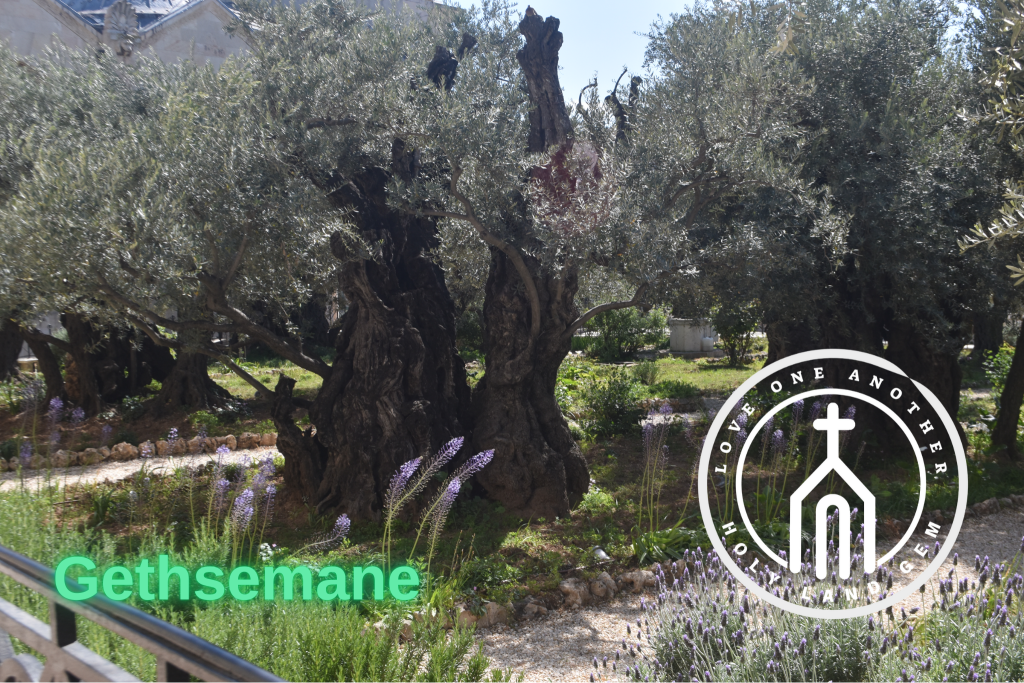
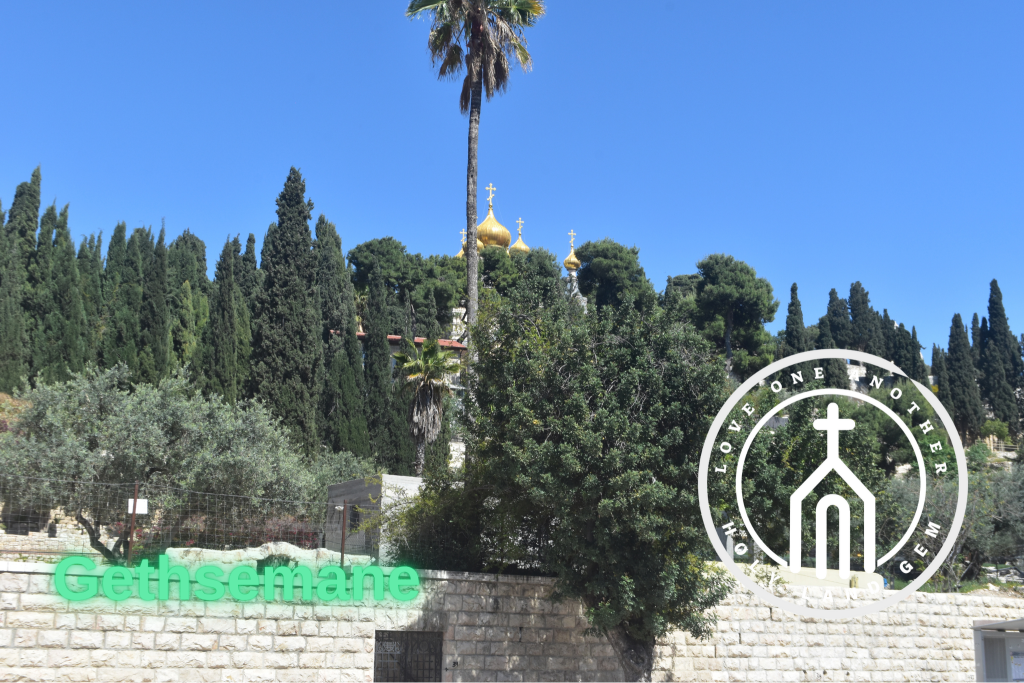
The Garden of Gethsemane: Nestled at the foot of the Mount, this garden of ancient olive trees is identified as the place where Jesus retreated and prayed on the night before his crucifixion. Here, facing immense anguish, he wrestled with his destiny and ultimately accepted God’s will. The Franciscan Church of All Nations, also known as the Basilica of the Agony, stands to commemorate this profound moment of prayer and sacrifice. Within its walls, you can still feel the weight of that night as you contemplate Jesus’ final hours of freedom before his arrest.
The Church of the Ascension: Situated at the summit of the Mount, this shrine marks the traditional location where Jesus ascended into heaven forty days after his resurrection. While the site is now under Islamic custodianship, Christians are still permitted to visit and reflect upon this pivotal moment that signifies the culmination of Jesus’ earthly ministry and his glorification. The small edicule within the larger complex is believed to stand over the very rock imprinted by Jesus’ foot as he ascended.
The Pater Noster Church: According to tradition, it was in a grotto on the Mount of Olives that Jesus taught his disciples the Lord’s Prayer, “Our Father.” The current church, built over the supposed site of this teaching, proudly displays the Lord’s Prayer inscribed on ceramic tiles in hundreds of languages from around the world. Walking through its cloister, you can witness the universality of this foundational Christian prayer.
The Dominus Flevit Church: This small, teardrop-shaped church, designed by Antonio Barluzzi, commemorates the moment when Jesus wept over Jerusalem, foreseeing its future destruction. As recorded in the Gospel of Luke (19:41-44), Jesus’ sorrow stemmed from the city’s rejection of him as the Messiah and the impending suffering that awaited its inhabitants. The church’s windows offer a poignant view of the Temple Mount, the very site that elicited Jesus’ lament.
The Old City: The Stations of the Cross and Golgotha
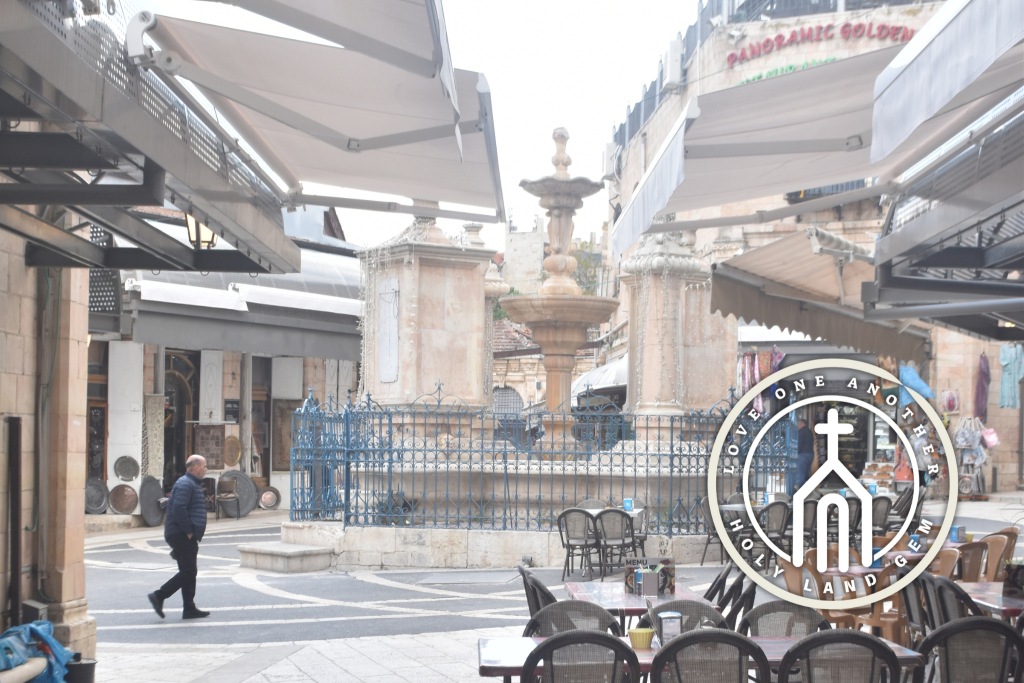
The Old City, with its labyrinthine alleyways and vibrant markets, is the very heart of Christian Jerusalem. It was within these ancient walls that the dramatic events of Jesus’ final days unfolded:
The Via Dolorosa (Way of Sorrow): This winding path through the Old City marks the traditional route that Jesus walked on his way to crucifixion, from the place of his condemnation to the hill of Golgotha. The Fourteen Stations of the Cross along the Via Dolorosa commemorate specific events that occurred during this agonizing journey. These stations are marked by chapels and churches, each recalling a moment of suffering, compassion, or divine intervention. Pilgrims from around the world walk this path, often in prayer and contemplation, retracing the steps of Jesus’ ultimate sacrifice.
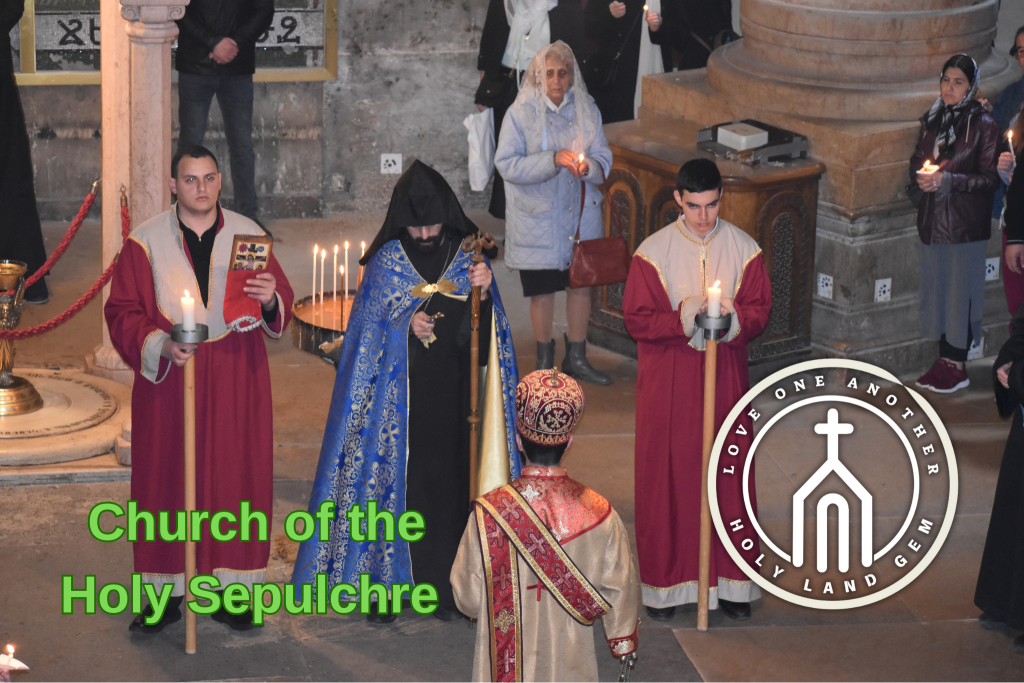
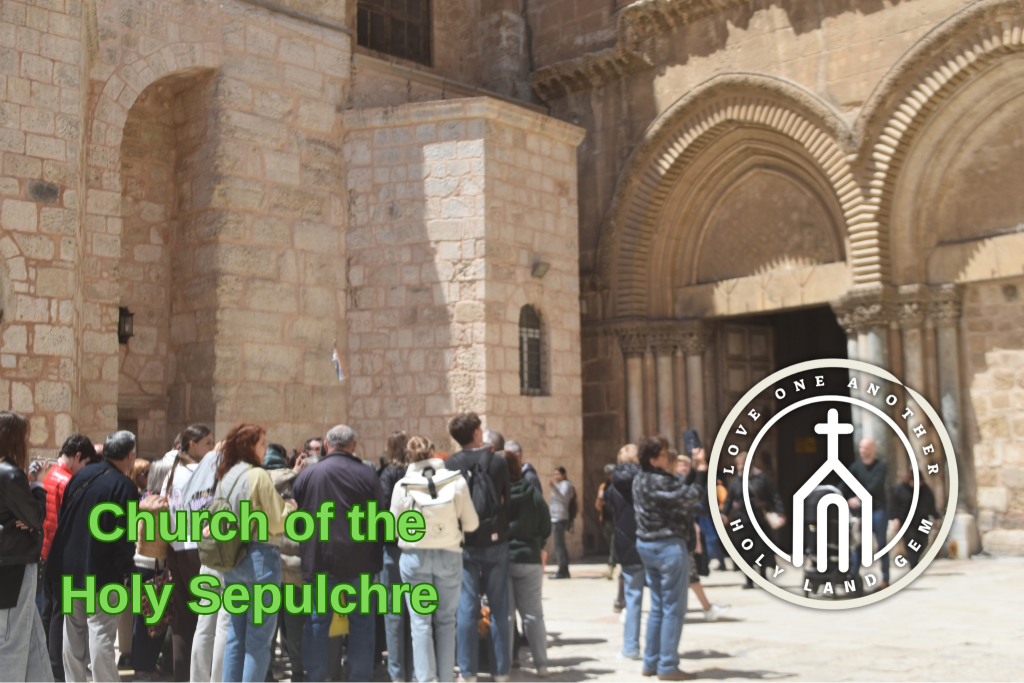
The Church of the Holy Sepulchre: One of the most significant and holiest churches in the Christian world, the Church of the Holy Sepulchre stands on the site traditionally identified as both Golgotha (Calvary), the hill where Jesus was crucified, and the location of his tomb, where he was buried and from which he resurrected. This magnificent and complex church houses numerous chapels and sacred sites, including the Rock of Calvary, where the crucifixion is believed to have taken place; the Stone of Anointing, where Jesus’ body was prepared for burial; and the Aedicule, a small shrine that encloses the traditional site of Jesus’ tomb. Visiting this church is deeply moving, allowing pilgrims to stand at the very locations of the central events of Christian faith.
Mount Zion: The Last Supper and Pentecost
Located just south of the Old City walls, Mount Zion is another site of immense importance for Christianity:
The Cenacle (or Upper Room): Tradition holds that this room was the location of The Last Supper, the final meal Jesus shared with his disciples before his crucifixion (Matthew 26:17-30, Mark 14:12-26, Luke 22:7-20, 1 Corinthians 11:23-26). It is here that Jesus instituted the Eucharist, sharing bread and wine as symbols of his body and blood. Furthermore, the Upper Room is also believed to be the site where Jesus appeared to his disciples after his resurrection (John 20:19-29) and where the Pentecost occurred, with the Holy Spirit descending upon the apostles (Acts 2). This single room thus holds immense significance for key events in the foundation of the Christian Church.
The Dormition Abbey: This impressive Benedictine abbey commemorates the Dormition (peaceful passing or “falling asleep”) of Mary, the mother of Jesus. According to Catholic and Eastern Orthodox tradition, Mary died in Jerusalem, though accounts of her final years and the exact location vary. The current church, with its striking conical roof and serene crypt, provides a place for reflection on the life and faith of Mary, a central figure in Christian theology.
A visit to Jerusalem and its holy Christian sites is an inspiring and profound experience. Walking in the footsteps of Jesus through the Old City’s ancient streets, praying in the Garden of Gethsemane, and standing within the Church of the Holy Sepulchre allows visitors to connect deeply with the roots of their faith and the foundational narratives of Christianity. Jerusalem remains, and will forever be, an eternal city for Christians worldwide.
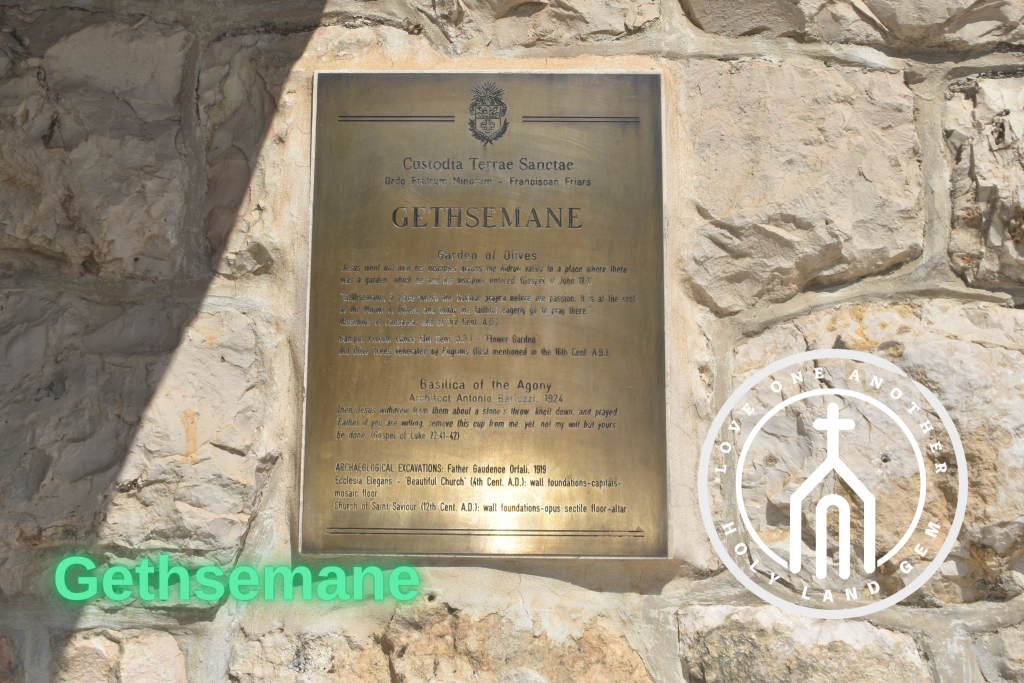
vicinity of the Garden of Gethsemane.
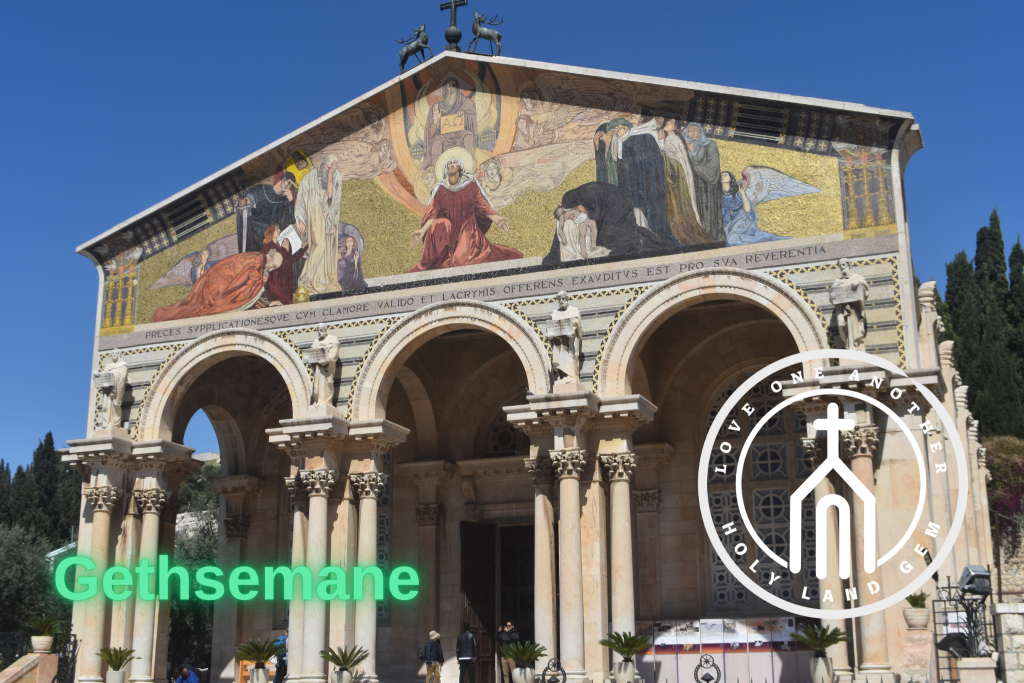
We carefully chose these stones. For us, these stones hold a special significance. Given the profound connection of this place to Jesus, who, as the Gospels suggest, often gathered there with his disciples, we feel a sense of holiness associated with the land and, by extension, the stones we collected.
The Garden of Gethsemane, nestled on the western slope of the Mount of Olives in Jerusalem, holds a profound and poignant significance in Christian tradition. Its very name, derived from the Aramaic “gat shemanin,” meaning “oil press,” evokes images of the olive groves that have likely dotted this landscape for centuries. Beyond its botanical identity, Gethsemane is indelibly linked to the final hours of Jesus of Nazareth before his arrest, trial, and crucifixion.
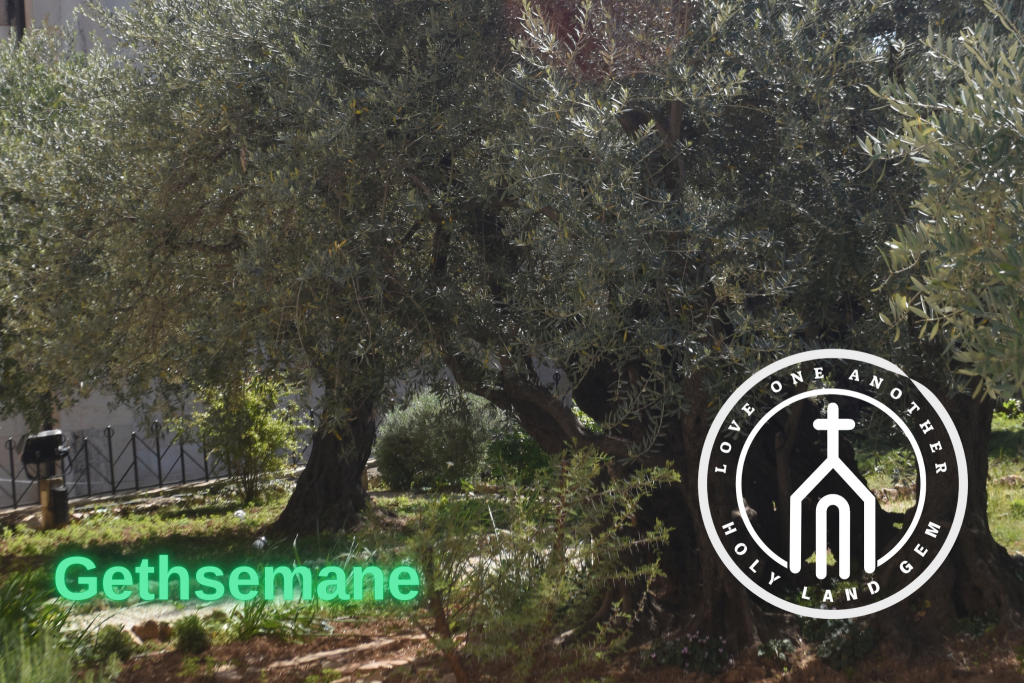
The Gospels provide the primary accounts of Jesus’ presence in Gethsemane. Matthew 26:36 states, “Then Jesus went with his disciples to a place called Gethsemane, and he said to them, ‘Sit here while I go over there and pray.'” Similarly, Mark 14:32 records, “They went to a place called Gethsemane, and Jesus said to his disciples, ‘Sit here while I pray.'” Luke’s Gospel (22:39) adds, “Jesus went out as usual to the Mount of Olives, and his disciples followed him. When he reached the place, he said to them, ‘Pray that you will not fall into temptation.'” These passages illustrate that Gethsemane was a familiar place for Jesus and his followers, a sanctuary where they could retreat. John’s Gospel (18:1-2) further supports this, noting, “When Jesus had spoken these words, he went out with his disciples across the Kidron Valley to a place where there was a garden, which he and his disciples entered. Now Judas, who betrayed him, also knew this place, because Jesus had often met there with his disciples.” The repeated mention of Jesus meeting his disciples in the garden suggests it served as more than just a momentary stop; it was a place of gathering, teaching, and perhaps even a temporary refuge.
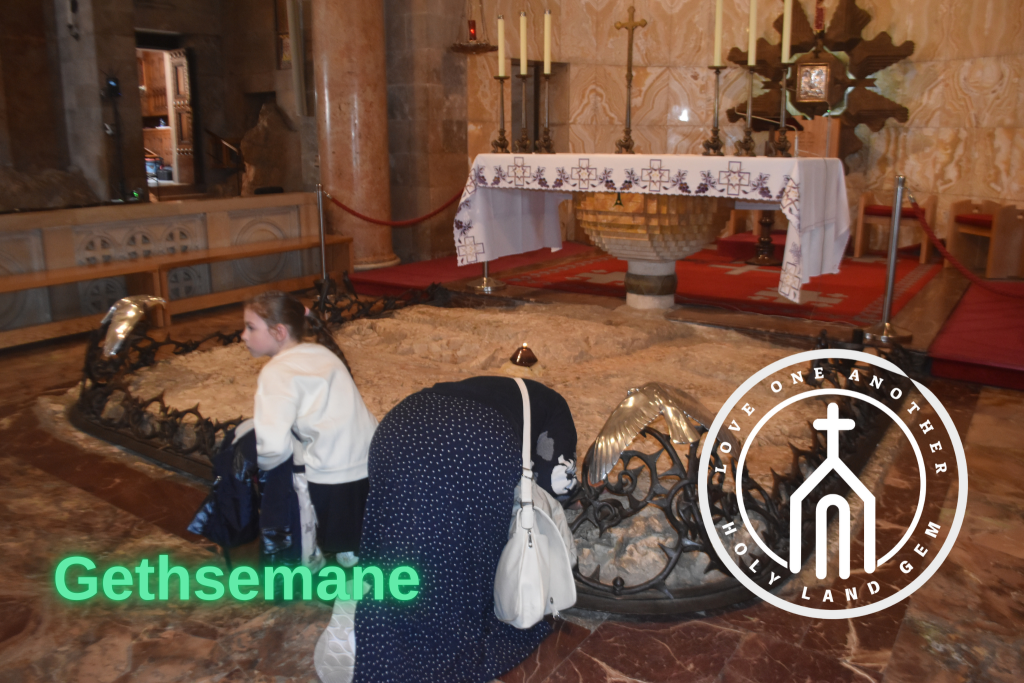
It was in this familiar setting that Jesus experienced profound emotional and spiritual anguish. Matthew (26:38-39) recounts, “Then he said to them, ‘My soul is overwhelmed with sorrow to the point of death. Stay here and keep watch with me.’ Going a little farther, he fell with his face to the ground and prayed, ‘My Father, if it is possible, may this cup be taken from me. Yet not as I will, but as you will.'” Luke’s description (22:43-44) adds a visceral detail: “An angel from heaven appeared to him and strengthened him. And being in anguish, he prayed more earnestly, and his sweat was like drops of blood falling to the ground.” This intense prayer underscores the immense weight Jesus felt in anticipation of his suffering.
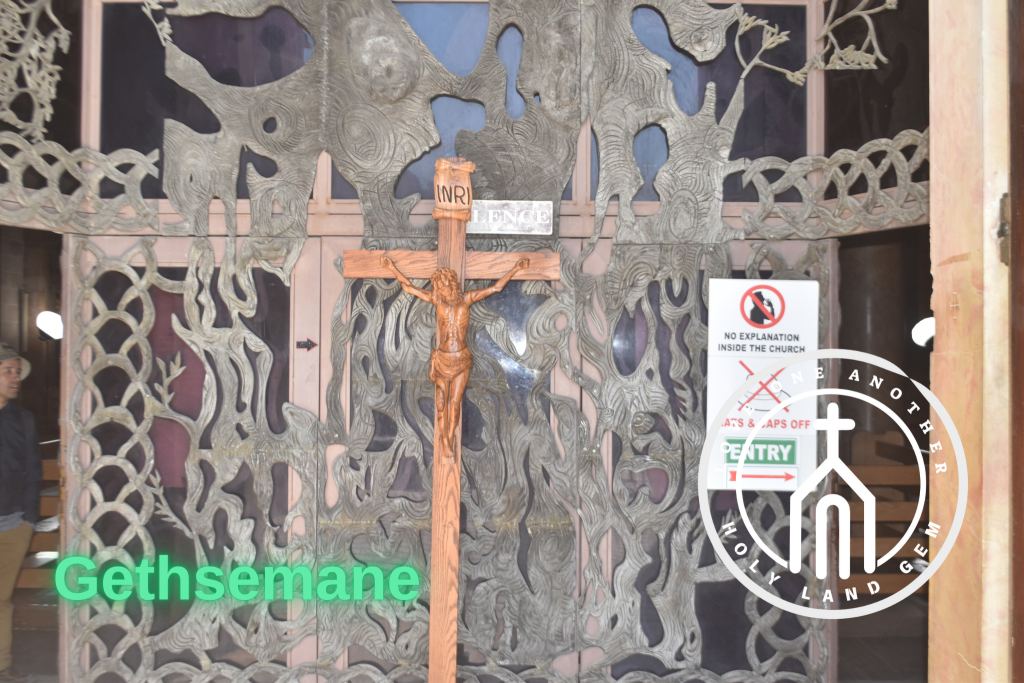
While the prophetic texts of the Hebrew Bible do not explicitly name Gethsemane, some interpretations connect the events that transpired there with broader themes of suffering and sacrifice found in the Old Testament. For instance, Isaiah 53, often interpreted as a prophecy of the Messiah, speaks of one “despised and rejected by mankind, a man of suffering and familiar with pain” (Isaiah 53:3). The agony experienced by Jesus in Gethsemane aligns with this portrayal of profound suffering. Similarly, the imagery of being “crushed for our iniquities” (Isaiah 53:5) can be seen to foreshadow the physical and emotional torment Jesus endured in the lead-up to his crucifixion.
Reflecting on our connection to this sacred space, during our visit to the Mount of Olives, at Passover 2025, we collected some stones from the vicinity of the Garden of Gethsemane. We carefully chose these stones and broke them down to fit into small jars. For us, these stones hold a special significance. Given the profound connection of this place to Jesus, who, as the Gospels suggest, often gathered there with his disciples, we feel a sense of holiness associated with the land and, by extension, the stones we collected. This personal experience underscores the enduring spiritual resonance of Gethsemane, a place where the earthly and the divine intersect in a moment of pivotal significance for Christian history and faith. The very ground seems to echo with the weight of Jesus’ prayers and the dawn of his ultimate sacrifice.
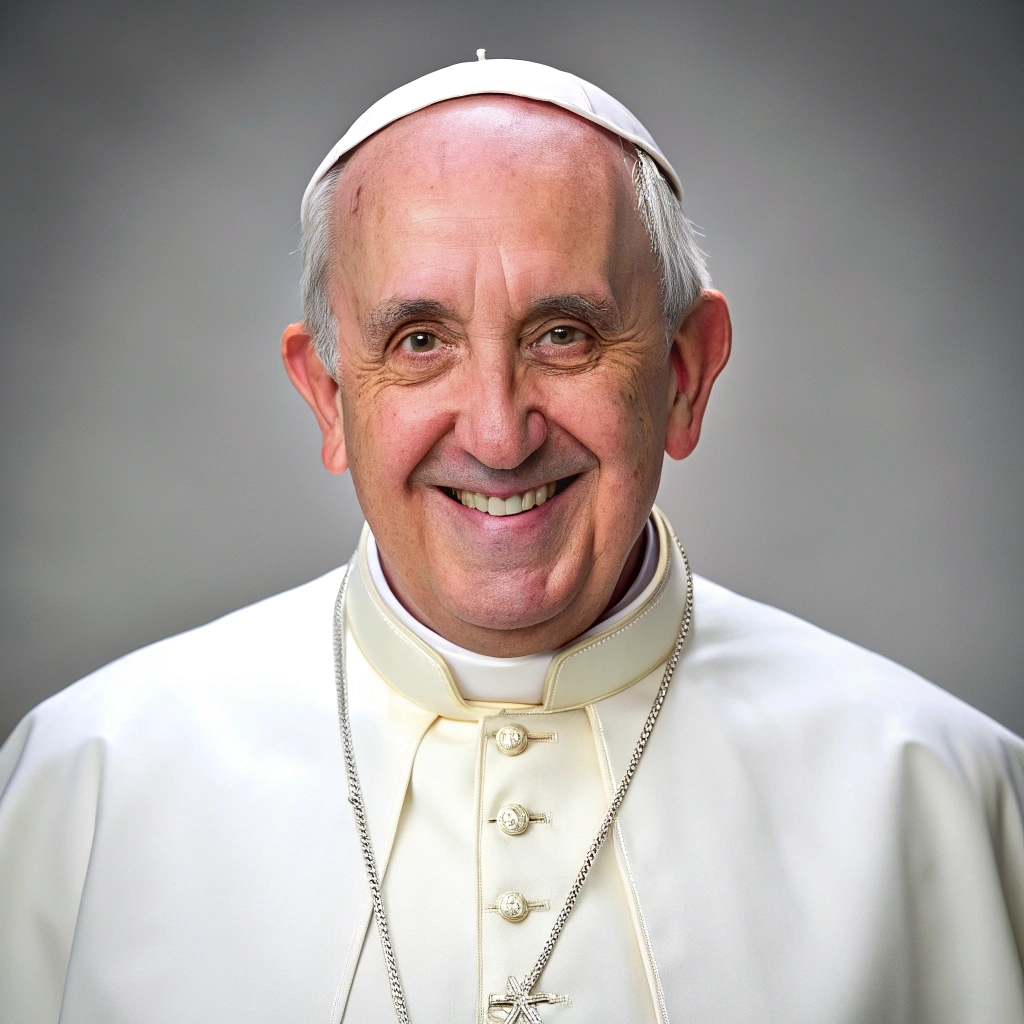
Pope Francis’s 2014 Visit to Israel: A Pilgrimage for Peace and Unity
From May 24-26, 2014, Pope Francis undertook a historic pilgrimage to Israel and the Palestinian Territories, marking the 50th anniversary of Pope Paul VI’s landmark visit. This journey was deeply rooted in the pursuit of peace, interfaith dialogue, and spiritual reflection.
Key highlights of his visit, particularly within Jerusalem, included:
- Church of the Holy Sepulchre:
- A significant moment was his ecumenical celebration within the Church of the Holy Sepulchre. This site, revered by Christians as the location of Jesus’s crucifixion and burial, held profound spiritual importance for the Pope’s pilgrimage. His presence there emphasized the unity sought among Christian denominations.
- Church of Gethsemane:
- Pope Francis visited the Church of Gethsemane, located at the foot of the Mount of Olives. This site, where Jesus and his disciples prayed before his arrest, provided a space for the Pope to reflect and pray for peace. He also held a meeting with priests, religious, and seminarians there.
- Other Jerusalem Sites:
- The Pope also visited the Western Wall, the Dome of the Rock, and Yad Vashem, demonstrating his commitment to interfaith relations and Holocaust remembrance.
- Church of the Holy Sepulchre:
This 2014 pilgrimage served as both a spiritual endeavor and a diplomatic mission. Pope Francis’s actions and words aimed to foster understanding and promote enduring peace within the Holy Land
Rest in Peace Pope Francis